
More than 52 percent of American businesses now depend on data to shape every marketing decision. For global Shopify and WooCommerce entrepreneurs, embracing data-driven strategies is the difference between stagnant sales and scalable profit. Unlocking precision from real customer analytics means rising above guesswork and driving targeted growth. This guide brings actionable steps you can use to maximize sales and raise your average order value through proven data-driven marketing methods.
Table of Contents
- What Is Data-Driven Marketing?
- Types of Data Used in Marketing
- How AI Powers Advanced Insights
- E-Commerce Applications and Best Practices
- Common Mistakes and How to Avoid Them
Key Takeaways
| Point | Details |
|---|---|
| Data-Driven Marketing | Leverages analytics to create personalized strategies based on customer data, transforming marketing approaches. |
| Types of Marketing Data | Utilizes demographic, behavioral, and psychographic information to enhance targeting and personalization efforts. |
| AI in Marketing | Employs Artificial Intelligence to analyze data, predict behaviors, and optimize marketing strategies effectively. |
| Common Mistakes | Poor data governance and undifferentiated information can lead to ineffective campaigns; implementing robust data management is crucial. |
What Is Data-Driven Marketing?
Data-driven marketing transforms how businesses understand and engage with customers by leveraging analytics to make strategic decisions. Unlike traditional marketing approaches based on intuition, this method relies on concrete data collected from customer interactions, digital behaviors, and transactional patterns. By systematically analyzing customer behaviors, companies can predict future actions and design highly personalized marketing strategies.
At its core, data-driven marketing involves collecting, interpreting, and applying customer information across multiple touchpoints. This approach enables businesses to move beyond generic messaging and create targeted campaigns that speak directly to specific audience segments. Targeted advertising technologies allow marketers to minimize wasted advertising spend by focusing on demographics, psychographic data, and precise behavioral indicators like browsing history and purchase patterns.
The power of data-driven marketing lies in its ability to transform raw information into actionable insights. Modern e-commerce entrepreneurs can track customer journeys, understand purchasing motivations, and develop predictive models that anticipate consumer needs before they arise. This strategy involves multiple analytical lenses including descriptive analytics (understanding what happened), predictive analytics (forecasting potential outcomes), and prescriptive analytics (recommending specific actions).
Pro tip: Start small by collecting basic customer data from your e-commerce platform and gradually build more sophisticated analysis strategies as you become comfortable with interpreting customer insights.
Types of Data Used in Marketing
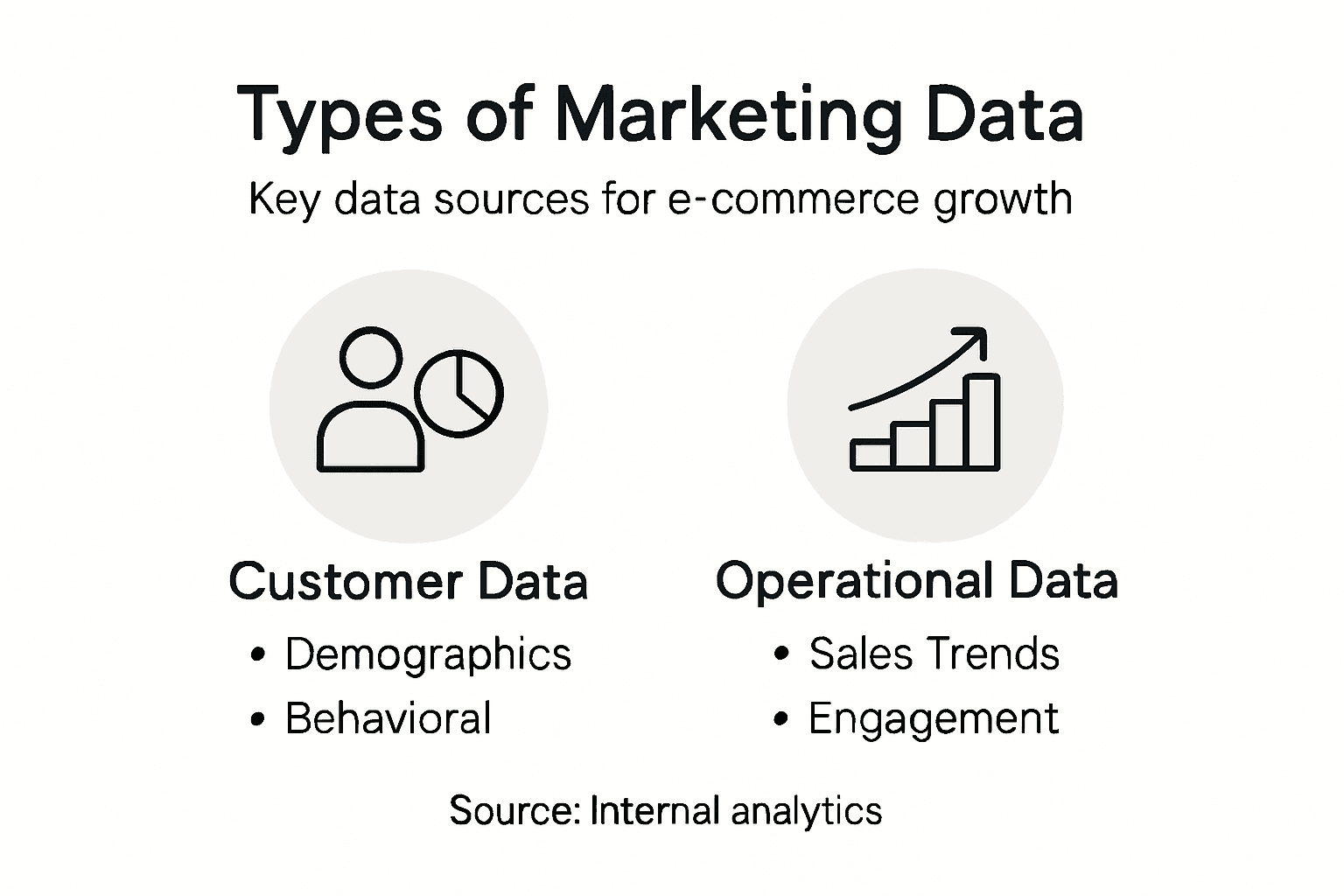
Marketing data represents a complex ecosystem of information sources that enable businesses to understand and predict consumer behavior. Marketing information comes from multiple channels, including digital platforms, customer interactions, and transactional records. These diverse data types can be categorized into three primary classifications: demographic, behavioral, and psychographic information.
Demographic data provides foundational insights about customer characteristics such as age, gender, income, location, and education level. Behavioral data tracks actual customer actions, including website visits, purchase history, product interactions, and engagement metrics across digital platforms. Psychographic data delves deeper, exploring customer motivations, interests, lifestyle preferences, and personal values that influence purchasing decisions.

Here’s a comparison of the three main types of marketing data and their strategic advantages:
| Data Type | Key Characteristics | Strategic Impact |
|---|---|---|
| Demographic | Age, gender, income, location | Enables broad targeting |
| Behavioral | Purchase history, website actions | Fuels personalization efforts |
| Psychographic | Values, interests, lifestyle | Drives deep segmentation |
Companies typically collect data through multiple touchpoints, integrating information from internal and external sources. These sources might include website analytics, social media interactions, customer surveys, transaction records, loyalty program data, and competitive intelligence. By synthesizing these diverse data streams, marketers can create comprehensive customer profiles that enable precise targeting and personalization strategies.
Pro tip: Implement a robust customer data management system that consolidates information from multiple sources, ensuring data quality and accessibility for strategic decision-making.
How AI Powers Advanced Insights
Artificial Intelligence is revolutionizing marketing by transforming massive data volumes into actionable strategic insights. AI technologies enable unprecedented marketing intelligence, allowing businesses to move beyond traditional analytical approaches and unlock deeper understanding of consumer behaviors and preferences.
AI-powered marketing insights operate through several sophisticated mechanisms. Machine learning algorithms can analyze complex patterns in customer data, identifying subtle correlations that human analysts might overlook. These systems can predict future purchasing behaviors, segment audiences with remarkable precision, and generate personalized recommendations that dramatically increase conversion rates. By continuously learning from new data, AI models become increasingly accurate over time, creating a self-improving intelligence system.
In e-commerce specifically, AI transforms marketing strategies by enabling real-time personalization and predictive analytics. Intelligent systems can now track customer journeys across multiple touchpoints, understanding individual preferences and anticipating needs before customers explicitly express them. This allows businesses to create hyper-targeted marketing campaigns, optimize pricing strategies, and develop more effective product recommendations that feel intuitive and timely.
Pro tip: Invest in AI-powered analytics tools that integrate seamlessly with your existing e-commerce platform, focusing on solutions that provide clear, actionable insights rather than overwhelming data complexity.
E-Commerce Applications and Best Practices
Digital technologies are fundamentally reshaping e-commerce strategies, offering businesses unprecedented opportunities for growth and innovation. Emerging technologies drive competitive advantage by enhancing operational efficiency, personalizing customer experiences, and creating more intelligent marketing approaches.
Successful e-commerce applications leverage multiple technological innovations. Personalized recommendation systems stand at the forefront, using advanced algorithms to analyze user behavior and generate contextually relevant product suggestions. These intelligent systems can track individual customer preferences, predict potential purchases, and create seamless shopping experiences that feel intuitive and responsive. By understanding nuanced consumer patterns, businesses can dramatically improve conversion rates and customer satisfaction.
AI-driven recommendation technologies enable precise customer segmentation and targeting. Modern e-commerce platforms can now create dynamic user experiences that adapt in real-time, presenting personalized interfaces, product recommendations, and pricing strategies tailored to individual customer profiles. This approach goes beyond traditional demographic segmentation, utilizing complex behavioral data to create truly individualized marketing strategies.
Pro tip: Prioritize data privacy and transparent communication when implementing personalization technologies, ensuring customers understand and feel comfortable with how their information is being used.
Common Mistakes and How to Avoid Them
Data-driven marketing strategies can quickly become ineffective when organizations fail to implement robust data management practices. Poor data governance undermines marketing effectiveness, creating significant challenges for businesses seeking to optimize their digital marketing efforts.
One of the most critical mistakes is relying on undifferentiated customer data that fails to capture meaningful insights. Many organizations collect vast amounts of information but lack the strategic filtering necessary to create truly actionable intelligence. This leads to AI systems that optimize for volume rather than value, generating broad campaigns that miss specific customer segments and fail to drive meaningful engagement.
Marketing attribution models require meticulous data management to deliver accurate insights. Businesses often invest in sophisticated analytics platforms without establishing proper data infrastructure, resulting in flawed optimization strategies. Successful data-driven marketing demands continuous data validation, precise segmentation, and a commitment to maintaining high-quality, consistent information across all marketing channels.
Below is a summary of common data-driven marketing mistakes and recommended solutions:
| Mistake | Negative Effect | How to Avoid |
|---|---|---|
| Poor data governance | Inaccurate campaigns | Conduct regular data audits |
| Undifferentiated customer information | Low engagement rates | Implement customer segmentation |
| Flawed attribution models | Misleading performance analysis | Ensure robust data management |
Pro tip: Implement a quarterly data audit process that rigorously validates your marketing data sources, ensuring clean, accurate, and actionable information drives your strategic decisions.
Drive E-Commerce Growth with Data-Driven Insights
Unlock the full potential of your e-commerce store by transforming raw sales data into powerful marketing strategies. The article highlights common challenges like poor data governance and undifferentiated customer information that lead to missed opportunities and low engagement. If you want to move beyond generic campaigns and harness predictive analytics, personalized product recommendations, and AI-powered segmentation, you need a solution built specifically for e-commerce entrepreneurs.
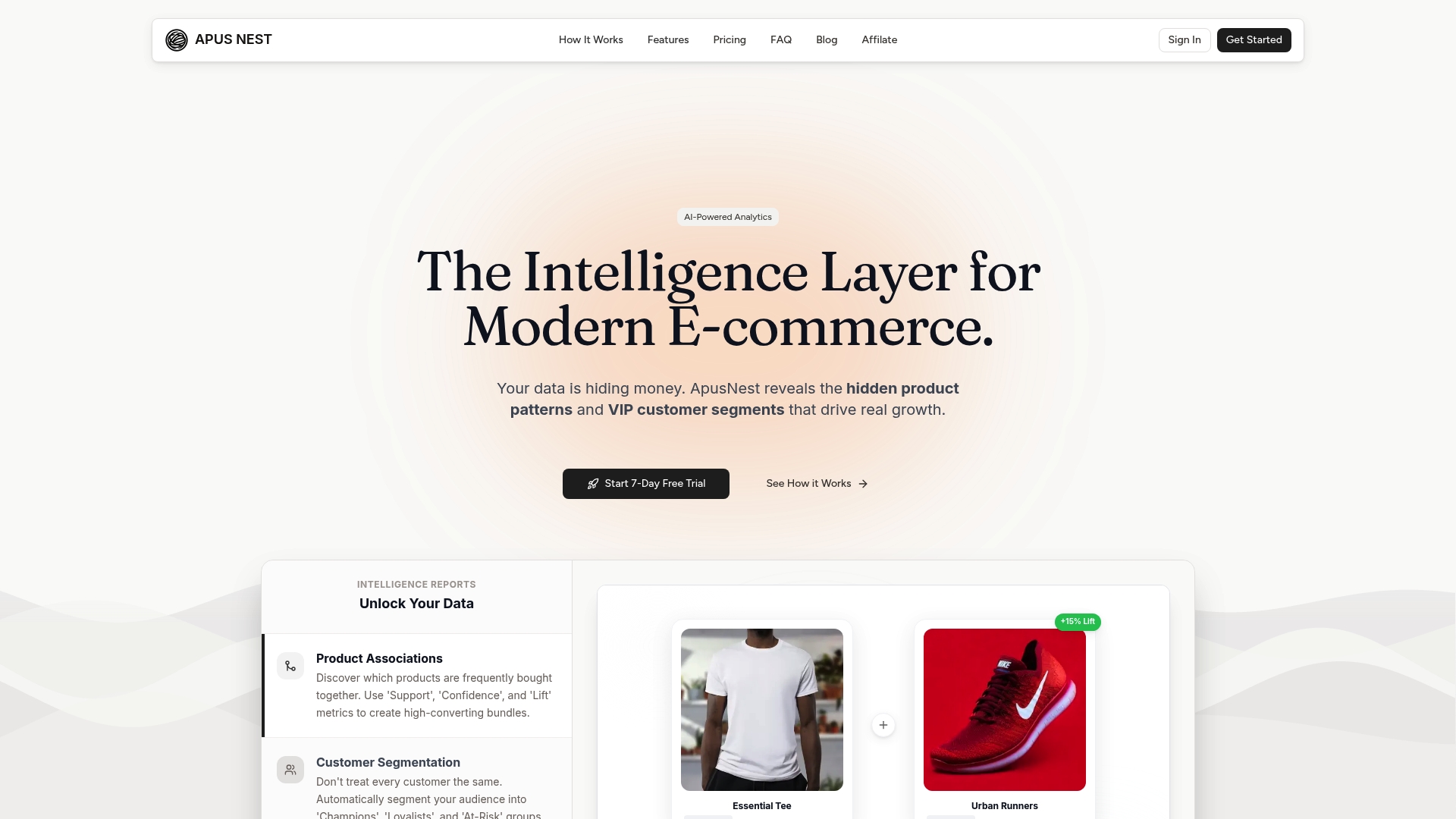
Affinsy is designed to help Shopify and WooCommerce store owners uncover hidden revenue through advanced market basket analysis. By analyzing your sales data, Affinsy identifies strong product pairings and actionable cross-sell strategies that increase your average order value. This platform respects your data ownership and offers transparent, subscription-free plans that allow you to export raw data for deeper marketing integration.
Take the first step toward smarter marketing by exploring how Affinsy enables precise customer insights and AI-driven product bundling. Start with a free report or unlock comprehensive analytics by visiting Affinsy today. Don’t let poor data management hold your growth back. Empower your business with actionable intelligence at Affinsy and turn data-driven marketing theory into real-world revenue increases.
Frequently Asked Questions
What is data-driven marketing?
Data-driven marketing is a strategic approach that uses analytics and customer data to inform marketing decisions, moving beyond intuition to concrete insights about consumer behaviors and preferences.
What types of data are used in data-driven marketing?
Data-driven marketing utilizes three main types of data: demographic (age, gender, income), behavioral (purchase history, website interactions), and psychographic (values, interests, lifestyle) information to develop targeted marketing strategies.
How does AI enhance data-driven marketing strategies?
AI enhances data-driven marketing by analyzing large volumes of customer data to identify patterns, predict future behaviors, and generate personalized recommendations, leading to more effective marketing campaigns and increased conversion rates.
What are common mistakes in data-driven marketing?
Common mistakes include poor data governance, relying on undifferentiated data that lacks meaningful insights, and utilizing flawed marketing attribution models. These can result in ineffective campaigns and lower customer engagement.
Recommended
- Understanding Data-Driven Campaign Optimization for E-Commerce - Affinsy Blog | Affinsy
- Complete Guide to Analytics in Marketing Strategy - Affinsy Blog | Affinsy
- Understanding Data Analysis for Marketers Guide - Affinsy Blog | Affinsy
- Data Driven Ecommerce: Unlocking Revenue Potential - Affinsy Blog | Affinsy
- How Magento can help increase your AOV • Bigeyedeers.co.uk